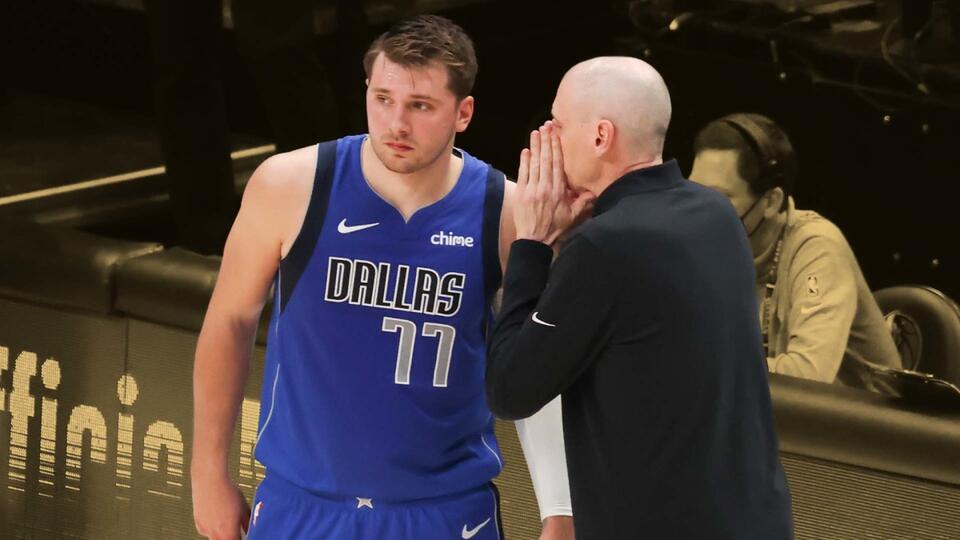
Rick Carlisle's Unwavering Verdict: Why Luka Doncic is the 'Greatest Player I've Coached'
In the high-stakes world of professional basketball, narratives shift faster than a fast break. One day, a generational talent is lauded; the next, he's dissected, criticized, and deemed lacking. This was precisely the rollercoaster Luka Doncic found himself on a recent Friday morning in Los Angeles. The sports world, it seemed, had already rendered its verdict: soft, immature, a whiner, a defensive liability, and utterly lacking the championship temperament. Sports talk radio feasted, looping clips of Doncic's frustrations, his arguments with referees, his visible dissatisfaction. The hot takes piled up, echoing a single, damning conclusion: "He's not mature enough to win a championship."
However, amidst this cacophony of criticism, a voice of seasoned wisdom cut through the noise – a voice that resonated with authority, experience, and an intimate understanding of Luka Doncic's unique genius. Rick Carlisle, the accomplished NBA champion as both a player and coach, and the man who once guided Doncic through his formative superstar years with the Mavericks, stepped forward with an unequivocal declaration that should have, by all rights, silenced the doubters immediately: "He's the greatest player I've ever coached."
The Unwavering Endorsement: Rick Carlisle's Bold Claim and its Implications
Carlisle’s statement wasn't just a casual compliment; it was a profound testament from a coach whose career has spanned decades, overseeing numerous All-Stars, MVPs, and even leading a team to an NBA championship. To label Doncic as the "greatest" he'd ever coached – a list that includes the likes of Dirk Nowitzki – speaks volumes about the Slovenian sensation's unparalleled talent and potential.
Carlisle didn't stop there. He elaborated on his conviction, painting a picture of a player destined for legendary status: "He's going to be an MVP one day," Carlisle asserted, articulating a future many analysts have long predicted. He continued, highlighting the sheer difficulty of facing Doncic on the court: "It's hell to play against him. He's impossible to game-plan for." This isn't just hyperbole; it's a strategic assessment from a coach renowned for his tactical prowess. Doncic's multifaceted offensive arsenal – his ability to score from anywhere, facilitate, and command attention – truly makes him a defensive nightmare.
But perhaps the most telling part of Carlisle’s endorsement was his observation about Doncic's control over the game: "I've never seen a player that controls an NBA game the way he does." This speaks to a rare attribute possessed by only a handful of basketball's all-time greats. It's not merely about scoring points; it's about dictating pace, manipulating defenses, and elevating the performance of every teammate on the floor. For a player to have such a profound and pervasive influence on an NBA contest at such a young age is genuinely extraordinary.
The Nature of Greatness: Fury, Stubbornness, and the Pursuit of Excellence
The paradox, of course, was that the player Carlisle hailed as the "greatest" was the very same individual being mercilessly roasted on airwaves just hours prior. Carlisle, however, understands a fundamental truth that often eludes the instant-reaction debate machines: greatness isn't always polished or polite. Greatness, more often than not, manifests as fury, stubbornness, and an intense, sometimes volatile, desire to win. "You show me a great player that isn't stubborn and doesn't get pissed off," Carlisle challenged, "and I'll show you a guy that's not a great player."
This insight offers a crucial lens through which to view Doncic's perceived "immaturity." What critics might interpret as whining or a lack of composure could, in reality, be the raw, unfiltered passion of an athlete who despises losing and demands perfection, both from himself and his teammates. Elite competitors often wear their emotions on their sleeves, their frustration stemming from a deep-seated commitment to excellence. For coaches and fans, understanding this distinction is vital:
- Emotional Expression vs. Lack of Control: Not all emotional outbursts signify a lack of control. Sometimes, they are a powerful, albeit unpolished, display of competitive drive.
- Learning and Growth: Players, especially young superstars, are constantly learning how to channel their intensity effectively. The journey to maturity is an ongoing process, not a static state.
- The Coach's Perspective: A good coach sees beyond the immediate reaction to the underlying drive. Carlisle's long tenure allowed him to witness Doncic's evolution and understand the source of his intensity.
This perspective reminds us that the path to greatness is rarely tidy. It often involves overcoming perceived flaws, harnessing intense emotions, and continuously refining one's approach under immense pressure.
From Criticized to Conqueror: Doncic's Dominant Response on the Court
Whether Luka heard Carlisle's defiant defense or simply tapped into the innate resolve that defines true champions, what transpired next on the basketball court was nothing short of spectacular. Facing the Indiana Pacers on the second night of a back-to-back, with key players like LeBron James, Deandre Ayton, and Maxi Kleber sidelined, the Lakers were expected to be vulnerable. The Pacers arrived in Los Angeles smelling blood, anticipating an easy prey. Instead, they ran headlong into a determined, almost indignant, player in purple and gold, wearing No. 77.
Doncic didn't just play well; he set the floor on fire. He poured in a staggering 44 points in just 32 minutes, drilling seven 3-pointers with the casual ruthlessness of a maestro flicking pebbles into the ocean. The game was effectively over before halftime, a testament to his overwhelming dominance. He unleashed a full arsenal of offensive weaponry:
- Step-back 3s: Silencing defenders with his signature move, creating space where none seemed to exist.
- Thread-the-needle passes: Bending defensive schemes into knots, finding teammates for easy scores with precision passing.
- Post-ups: Turning defenders into mere furniture, exploiting mismatches with masterful footwork and strength.
It wasn't just scoring volume; it was total control. Every possession underscored Carlisle's earlier words: "I've never seen a player that controls an NBA game the way he does." Lakers coach JJ Redick, after the 128-117 victory, succinctly captured Doncic's dual threat: "He’s a shotmaker, but he’s also a playmaker." This performance was a vivid, undeniable rebuttal to his critics, a powerful reminder that action on the court often speaks far louder than any pundit's hot take.
Beyond the Hardwood: Public Scrutiny and Personal Lives
The intense spotlight on a superstar like Luka Doncic is multifaceted, extending far beyond his game-time performance to encompass his character, leadership, and even personal demeanor. This pervasive public gaze often sparks curiosity not just about their professional achievements but also their private lives. Fans are naturally inquisitive about the individuals behind the jerseys, seeking insights into everything from hobbies to family life. While the core of recent discourse has revolved around Doncic's on-court temperament and undeniable skill, the fascination with athletes also often includes questions about Luka Doncic's personal relationships and inquiries into his Luka Doncic Eşi (spouse). It's a testament to the comprehensive nature of celebrity in the modern sports era, where every aspect of a player's existence can become a topic of public interest.
Balancing this intense scrutiny of both professional and personal spheres is a unique challenge for elite athletes. While Carlisle's defense focused on Doncic's basketball genius, the broader conversation around superstars frequently touches upon how they manage their lives away from the court, adding another layer to the immense pressure they face.
Conclusion: The Enduring Power of Belief and Performance
Rick Carlisle's powerful endorsement of Luka Doncic stands as a crucial counter-narrative to the fleeting criticisms that often plague superstar athletes. His declaration that Doncic is the "greatest player he's ever coached" is not merely praise; it's an informed, experienced perspective on a generational talent's unique ability to control and dominate an NBA game. Carlisle's insight into the nature of greatness – often fiery, sometimes untidy – provides valuable context for understanding players who, like Doncic, wear their competitive passion openly.
Luka Doncic's subsequent 44-point masterclass against the Pacers served as a definitive exclamation point, proving that when the noise gets loud, true greatness responds not with words, but with an undeniable performance. This episode underscores the enduring power of a coach's faith in his former protégé and a superstar's unwavering ability to silence doubts where it matters most: on the basketball court.